
Created 26/3/2015.
Updated 19/1/2024.
Dental Veneers: An Aesthetic Solution to Protect and Beautify your Smile
If you are looking to improve the aesthetics of your smile and protect your teeth, you may have come across different options, such as dental caps and dental veneers. However, it is important to understand the differences between them and which is the best option for you. In addition, finding a dental clinic that specializes in cosmetic dentistry can make all the difference in the final results. In this article, we will explore the different types of dental veneers, the confusion between porcelain metal veneers, the importance of a dental clinic specialized in dental esthetics, the recovery of natural teeth through fixed prosthesis and the esthetic result that can be achieved with zirconia veneers.
Table of contents:
- What are dental caps?
- What are dental cases or crowns used for?
- How are dental caps attached?
- What material are dental crowns or caps made of?
- Advantages of dental caps.
- Types of dental veneers: Which is the best option for you?
- Dental veneers: Confused with porcelain metal veneers.
- The importance of a dental clinic specialized in dental esthetics.
- Fixed prosthesis: Recover your natural teeth.
- Zirconium sleeves: The esthetic result you were looking for.
1. What are dental caps?
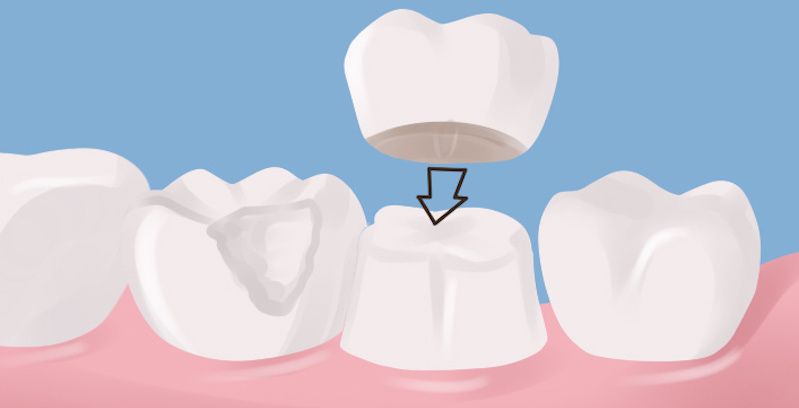
Dental caps are fixed prostheses that are placed on top of natural teeth or implants to replace missing teeth. The purpose of placing an artificial dental crown is to address any problems or damage to the natural crown of a tooth that may compromise its integrity. By placing an artificial crown, which is meticulously crafted to replicate the anatomical structure of a natural crown, the functionality and appearance of the tooth can be restored and preserved. The artificial crown is manufactured using different materials, ensuring its durability and ability to withstand the demands of daily oral activities.
2. What are dental caps or crowns used for?
Currently, dentists recommend dental crowns or sleeves especially for the following cases:
- For teeth with a root canal
- Teeth with deep stains that are not solved with whitening or tooth veneers
- Teeth destroyed by deep cavities
- Complementary part of dental bridges.
- Replace from one to all teeth in the mouth leaving a very aesthetic smile to the patient.
Visit our clinics to explain your case. On the first visit we will perform a dental CT and a complete study, totally free of charge. In this way we will know the extent of the problem, your needs and we can advise you on the different types of dentures, the advantages of each one and the price of the whole treatment.
Do not doubt our professionalism, we will inform you about the best alternatives according to your situation. Book your visit today.
3. How are dental caps attached?
We have two systems for attaching dental caps to dental implants:
- The simplest is to fabricate a dental sheath that is screwed directly to the implant. The dental sheath and the implant are in direct contact and can withstand high pressures without any problems. They are basically used in molars and premolars as they are wide teeth that also support a lot of pressure when chewing.
- When we need better esthetics or we have to place the dental implants at an angle, we make cemented dental caps. On top of the implant we screw a titanium prosthetic attachment that acts as an abutment. The dental sheath is cemented on this titanium abutment.
4. What material are dental crowns or caps made of?
Artificial crowns are made of different materials in a dental laboratory. After the measurements are taken in the dental office, they are sent to a collaborating laboratory to design and shape the new artificial crown for the tooth in question. The materials used in the manufacture of these crowns are: metal crown, metal-ceramic crown and resin crown.
5. Advantages of dental caps.
Crowns or dental caps on implants are currently the most common type of crowns or dental caps due to their many advantages, among which the following stand out:
- We can replace a single tooth or all the teeth in the mouth.
- It is not necessary to file or destroy neighboring teeth to fit dental caps or crowns.
- They improve the survival of the teeth in the mouth as they withstand high pressure without being altered.
- Implants and prosthetics on implants are more successful than dental crowns and caps on teeth.
They can be made of metal and ceramic, all-ceramic and zirconium and ceramic, achieving perfect esthetics of the prosthetic teeth. Go to this section to see the types of dental prostheses and the different types of dental implants.
6. Types of dental caps: Which is the best option for you?
When it comes to choosing the right type of dental sheath, it is important to consider several options and evaluate which one is best for you. There are several types of dental veneers, such as porcelain metal veneers, zirconia veneers and dental veneer veneers. Each has its own advantages and characteristics. Porcelain metal sleeves are durable and strong, but may not be as aesthetically pleasing as other options. On the other hand, zirconium sheaths offer exceptional esthetic results and high strength, but are usually more expensive. Finally, dental veneers are a popular option for correcting esthetic problems in the anterior teeth, although they are not suitable for all cases. Ultimately, the best option will depend on your specific needs and the advice of your dentist. It is important to consult a professional for guidance and help you make the right decision.
7. Dental veneers: Confused with porcelain metal veneers.
Dental veneers are a popular option for improving the appearance of teeth. However, they are often confused with porcelain metal veneers. Unlike porcelain metal veneers, which are made of a combination of metal and ceramic, dental veneers are made entirely of ceramic or composite resin. Dental veneers are more esthetic than porcelain metal veneers because they are more natural looking and can be customized to match the color and shape of existing teeth. In addition, dental veneers are less invasive and require less preparation of the tooth prior to placement. It is important to seek out a dentist who specializes in cosmetic dentistry to ensure that the right material is used for the patient’s individual needs. If you are looking for a solution to improve the appearance of your teeth, consider dental veneers as an esthetic and durable option.
8. The importance of a dental clinic specialized in dental esthetics.
Dental esthetics is a fundamental part of modern dentistry, and having a dental clinic specialized in this field is of vital importance. A dental clinic specializing in cosmetic dentistry has the knowledge and experience necessary to offer patients the most advanced and effective treatments to improve the appearance of their smile. These professionals are up to date with the latest trends and techniques in the field of cosmetic dentistry, which allows them to provide personalized and high quality solutions to each patient. In addition, a dental clinic specializing in cosmetic dentistry uses state-of-the-art technology and top-quality materials to ensure exceptional esthetic results. By choosing a dental clinic that specializes in cosmetic dentistry, patients can be confident that they will receive comprehensive, personalized treatment to achieve a beautiful, healthy smile.
9. Fixed prosthesis: Restore your natural teeth.
Tooth loss is a common problem in the population, whether due to caries, periodontal disease or accidents. In these cases, fixed prostheses are an excellent option for restoring natural teeth and improving dental esthetics. This type of prosthesis consists of a metal structure that is placed over the remaining natural teeth and fixed with dental cement. Dental caps are placed on this structure, which cover the natural teeth and fit perfectly in the patient’s mouth. Fixed prostheses have a great advantage over removable prostheses, since they provide greater stability and comfort when chewing and speaking. In addition, they allow the recovery of dental esthetics lost due to the absence of dental pieces. Therefore, it is important to go to a dental clinic specialized in fixed prostheses to receive a personalized and quality treatment.
10. Zirconium sleeves: The esthetic result you were looking for.
Zirconia veneers are an excellent choice for those seeking a natural and long-lasting esthetic result. This material is highly resistant and adapts perfectly to the shape and color of natural teeth, making the caps virtually invisible. In addition, zirconium is hypoallergenic, making it a safe option for people with allergies or dental sensitivities. Zirconia caps are placed over the natural tooth to protect and enhance its appearance, and can be used in cases of broken, worn or discolored teeth. Unlike metal sleeves, zirconia sleeves do not cause esthetic problems or allergic reactions. In summary, if you are looking for a natural and long-lasting esthetic result for your teeth, zirconia veneers may be the best option for you.
In this article we have explored different aspects related to dental caps, dental veneers, dental esthetics and fixed prostheses. We have analyzed the different types of veneers available, from metal to zirconia, and we have highlighted the importance of visiting a dental clinic specialized in dental esthetics to obtain the best results. However, there is still an important point to reflect on: what impact does the use of these esthetic solutions have on long-term oral health? It is crucial to remember that, although caps and veneers can improve the esthetic appearance of our smile, it is essential to maintain good oral hygiene and visit the dentist regularly to ensure the health of our natural teeth. Esthetics should not be the only factor to consider when making dental treatment decisions; the care and protection of our natural teeth should also be a priority.
You may also be interested in:
Is the placement of dental caps on implants painful?
In our IMOI dental clinics we practice dental implantology with conscious sedation. This technique allows us to place several dental implants or more complex treatments without the patient noticing it, although the patient remains conscious throughout the intervention, so that the implant placement is painless.
Find out more about this IMOI conscious sedation technique in this section.
Is the process of diagnosing which type of denture is best complicated?
As always, it depends on each patient. In IMOI on the first visit we perform a complete dental study and a CT to diagnose the dental problem and offer you the best solution. Book a visit so we can better inform you about the different dental prostheses. In this section you can see all the free treatments we perform on the first visit.
What is the procedure for the placement of dental crowns or caps?
The placement of an artificial dental crown involves a sequence of steps that must be carefully followed. Here are the typical steps involved in this process:
- Preparation of the natural tooth: First of all, the natural or ground tooth is prepared so that it has the appropriate shape to receive the dental crown.
- Measurement: Next, precise measurements of the mouth and tooth are taken to ensure that the crown fits perfectly.
- Metal test: A test is performed using a metal crown to verify proper fit and make necessary adjustments if required.
- Ceramic model try-in: A try-in is performed using a ceramic crown to ensure that it looks and feels like a natural tooth.
- Polishing and glazing of the tooth: The dental crown is polished and glazed to obtain a smooth and shiny finish, which also helps prevent the accumulation of plaque and stains.
- Cementation: Finally, the dental crown is cemented in place using an adhesive cement, both mechanically, to secure it to the natural tooth, and chemically, to hold it together. The cement may wear out over time and require periodic reconstruction.
As for the life span of artificial dental crowns, it cannot be precisely determined due to various factors that may influence their lifespan. However, proper care and good oral hygiene will help to prolong their life. Regular visits to the dentist are essential to perform annual crown check-ups and detect possible problems such as fractures or decementations. In addition, the dentist may recommend an estimated life span for a specific dental crown based on the patient’s individual circumstances. The proper use of the crown and good care will ensure a longer life and functionality of the artificial dental crown.
What are the most frequent complications of dental crowns or dental caps?
Currently, dental professionals widely recommend the use of dental crowns or dental caps for various dental conditions. These include:
- Root canal teeth: Dental crowns are often placed on teeth that have undergone root canal treatment to provide protection and restore functionality.
- Deeply stained teeth: In cases where deep stains cannot be effectively treated with teeth whiteners or veneers, dental crowns may be a suitable option to disguise and improve the appearance of affected teeth.
- Extensively decayed teeth: Dental crowns are commonly used to restore teeth that have been severely damaged by deep decay, helping to strengthen tooth structure and prevent further decay.
- Dental bridges on missing teeth: Dental crowns serve as an integral part of dental bridges, which are used to replace one or more missing teeth. These crowns anchor the bridge in place, providing stability and functionality.
- Full mouth rehabilitation: Dental crowns can be used to replace multiple missing or damaged teeth, resulting in a complete and esthetically pleasing smile.
While dental crowns offer numerous benefits, it is essential to be aware of the potential problems that can arise. The most common problems associated with dental crowns include:
- Tooth sensitivity: Some people may experience sensitivity when consuming extremely hot, cold or acidic foods or beverages after receiving a dental crown.
- Allergies: Although rare, certain people may develop allergies to materials used in dental crowns, such as metal or porcelain. However, advances in materials such as zirconium have significantly reduced the likelihood of allergic reactions.
- Crown mobility: if you notice any movement or looseness in the crown, it is essential to schedule an appointment with your dentist immediately. A loose crown can eventually cause it to come off completely, allowing bacteria to enter and potentially causing further dental problems.
- Crown fall out: Similarly, if the crown falls out, it is important to seek dental care as soon as possible to have it reattached.
Being aware of these potential issues and addressing any problems promptly can help ensure the longevity and effectiveness of dental crowns, allowing people to enjoy the benefits they provide for a beautiful, healthy smile.
“When placing dental caps, several problems can arise. One of them is that the sleeves do not fit properly, which can cause discomfort and difficulty in chewing. In addition, if the covers do not fit properly, they can cause irritation to the gums and make proper dental hygiene difficult. Another common problem is tooth sensitivity after the veneers have been placed, especially if the veneers have had to be milled. el natural tooth to adapt the sheath. Finally, there is also a risk that the sleeves may become detached or break over time, requiring repair or replacement. It is important to be aware of these potential problems and to contact your dentist if you experience any discomfort or complications after placing the dental caps.”
In our IMOI dental clinics we prioritize patient comfort and satisfaction. That’s why we offer dental implant procedures with conscious sedation. With this technique, patients can undergo multiple dental implant placements or more complex treatments without experiencing any discomfort. Throughout the procedure, patients remain conscious, allowing for pain-free dental implant placement. However, it is important to address potential problems that may arise when placing dental crowns. When preparing a tooth for the placement of an artificial crown, a process called grinding or trimming is necessary. While this step is crucial to creating the necessary space for the crown, it can present some challenges. These challenges include:
- Weakening of the tooth: During the grinding process, the natural tooth may lose enamel, which can weaken its structure.
- Sensitivity: Removing the outer layer of enamel can cause tooth sensitivity, as the protective layer of the tooth is reduced. Fracture or further weakening: If the tooth already has extensive restorations, there is a risk of fracturing or further weakening the enamel during the milling process. In such cases, additional reconstruction may be necessary, which could further compromise the integrity of the tooth.
- Pulp damage: In rare cases, aggressive grinding can affect the dental pulp, requiring root canal treatment prior to placement of the final crown.
We understand the importance of addressing these potential problems when placing dental crowns. Our experienced dental professionals take every precaution to minimize these risks and ensure the best possible outcome for our patients.
When are dental crowns placed?
Dentists often recommend dental crowns, also known as dental caps or dental restorations, for several specific cases. These cases include:
- Root canal teeth: After a root canal procedure, a dental crown can be placed to provide strength and protection to the treated tooth, preventing further damage and discoloration.
- Teeth with deep stains that do not resolve with whitening or veneers: In cases where deep stains are resistant to other cosmetic treatments, dental crowns may be an effective solution. Solution to restore the natural appearance of teeth.
- Teeth destroyed by deep decay: When a tooth is badly damaged by deep decay, a dental crown can provide structural support and prevent further decay, restoring the tooth’s function and appearance.
- Supplementary part of dental bridges: Dental crowns are often used as a support structure for dental bridges, which are used to replace missing teeth. These crowns provide stability and support to the bridge, ensuring a functional and esthetically pleasing result.
- Replacing one or all of the teeth in the mouth, leaving a very esthetic smile for the patient: In cases where several teeth are missing or damaged, the dentist. Crowns can be used to restore the entire dental arch, resulting in a complete and visually attractive smile.
It is important to consult with a dentist to determine if dental crowns are the right treatment option for your specific dental condition. They will evaluate your oral health and discuss the potential benefits and considerations of dental crowns, ensuring the best possible outcome for your dental restorative needs.By combining our experience, advanced techniques and dedication to patient care, we strive to provide a pain-free, comprehensive dental experience.
What are the recommendations for the care of dental crowns?
In order for a dental crown to last in good condition for many years, it is advisable to follow certain guidelines. First of all, it is important to avoid eating very hard foods, as these can put pressure on the crown and cause damage. It is suggested to opt for softer and more delicate foods to preserve their integrity.
In addition, it is crucial to maintain good oral hygiene. It is recommended to brush your teeth after every meal, including those moments when you have ingested something. This will help remove food debris and prevent the accumulation of bacteria that could affect the crown.
It is also advisable to use proper tooth brushing techniques and oral hygiene products recommended by the dentist. These include a soft-bristled toothbrush and fluoride toothpaste.
Finally, it is important to have regular check-ups with your dentist. This professional will be able to examine the dental crown, make sure it is in good condition and make any necessary adjustments.
Follow these recommendations and you will be able to enjoy a long-lasting dental crown in optimal condition for many years.
Why does a dark line sometimes appear at the gum line of a dental crown?
Sometimes a dark line may appear at the gum line of a dental crown due to a natural phenomenon called gum recession. Dental crowns are usually composed of an outer layer of white porcelain that is fused to a metal base for proper fit and strength. Over time, the gums may naturally recede, exposing a thin strip of base metal under the porcelain. This can create the appearance of a dark line at the gum line.
How can a chipped dental crown be repaired?
To repair a chipped dental crown, the recommended action is to visit your dentist. The dentist will assess the extent of the damage and, depending on the size of the chip, there are some possible solutions. If the chip is relatively small, the dentist can perform a composite filling to fill the damaged area. On the other hand, if the fracture is more significant or if the composite filling is unsuccessful, the dentist may suggest the placement of a new dental crown to effectively restore the tooth structure and appearance.
What can cause a slight mobility of a dental crown and what should be done in such cases?
Slight mobility of a dental crown can sometimes occur when the cement that holds it in place gradually dissolves and deteriorates over time. This can lead to bacterial infiltration, which can potentially cause damage to the underlying natural tooth, such as decay and fractures. Therefore, it is crucial to promptly seek the help of your dentist in these cases. They will be able to clean the crown, re-cement it and seal it properly to make sure it is firmly fixed in place.
Is it possible to have an allergy to dental crown materials?
Yes, there are some risks of allergic reactions to dental crown materials. Although quite rare and uncommon, some patients may develop allergies to certain materials used in dental crowns, such as metals, porcelains or resins.
Artificial crowns are composed of mixtures of metals, porcelain or resins, and these materials may cause allergies in some people. Although rare, when allergic reactions occur, they may manifest as inflammation, irritation or tenderness of the oral tissues.
It is important to note that allergic reactions to dental crown materials do not occur frequently, but it is something to be aware of. If a patient has a known allergy to certain dental materials, additional precautions should be taken when selecting the type of crown to be used.
In general, it is important to discuss any known allergies or sensitivities with the dentist before proceeding with the placement of a dental crown. This will help to avoid any complications or adverse reactions. The dentist will be able to evaluate the appropriate materials to be used to minimize the risk of allergic reactions and ensure the patient’s safety and comfort during the procedure.
Is it normal to have tooth sensitivity while wearing dental caps?
In case of tooth sensitivity after grinding, there are several actions that can be taken. First, it is common to experience transient sensitivity to cold and heat after the procedure. However, if this sensitivity persists, it is important to evaluate whether the crown is placed too high on the tooth, which may cause discomfort when chewing. In this case, the occlusion can be adjusted using burs in the dental clinic.
If the sensitivity does not disappear after adjusting the occlusion, devitalization of the tooth by endodontic treatment may be considered. This procedure involves removing the dental pulp and sealing the root canal to eliminate any possible infection and relieve sensitivity.
It is important to contact your dentist if you experience tooth sensitivity after grinding, as they will be able to provide an accurate diagnosis and recommend the appropriate treatment to effectively address the problem.
What problems can I have if I wear dental crowns or caps?
In general, dental crowns or caps are usually durable and do not cause problems in the future. However, there are some complications that may arise. Below, I will describe two of the most common problems associated with dental crowns:
- Tooth sensitivity: After tooth grinding for crown placement, the tooth may be temporarily weakened. This may result in sensitivity to cold or heat, especially in vital teeth. In most cases, this sensitivity disappears with time. However, if it persists, it may indicate that the crown is too high and is causing discomfort when biting. In such cases, the dentist will adjust the occlusion using dental drills in the clinic. If the sensitivity does not disappear even after this correction, endodontic treatment may be considered to devitalize the affected tooth.
- Allergic reaction: Although rare, some people may develop allergies to the materials used in dental crowns. These crowns are usually composed of mixtures of metals, porcelain or resins. Some patients may have an allergic reaction to one or more of these materials. It is important to note that these allergic reactions are very rare, but if an allergy is suspected, tests should be performed and the option of using alternative materials for the dental crown will be considered.
In summary, although complications with dental crowns are rare, persistent tooth sensitivity and allergic reactions to the materials used are two problems that may arise in the future. It is important to contact your dentist if you experience any discomfort or unusual symptoms following the placement of a dental crown.
Conclusions on dental crowns or dental caps.
The placement of a dental crown is a simple procedure that provides both functional and esthetic benefits to the patient. Although occasional problems or unforeseen events may arise, these are rare and should not be an obstacle to undergoing treatment. It is important to keep in mind that, in order to ensure the durability of the crown, it is advisable to follow some guidelines. Avoiding eating very hard foods and brushing your teeth properly after each meal are key measures to ensure that the crown remains in optimal condition for many years. In general, the placement of a dental crown offers a safe, fast and minimally invasive solution to restore the functionality and esthetics of teeth.
What are the different types of dental veneers?
Dental veneers come in different types to meet the specific needs of each patient. There are two main techniques used to place veneers:
1. Direct veneers: These types of veneers are applied directly to the teeth in the dental clinic, without the need for an intermediate phase in the laboratory. They are usually made of composite material. Although direct veneers may not have the same level of perfection as indirect veneers, they can still provide satisfactory results.
2. Indirect Veneers: For indirect veneers, teeth are prepared and then precise measurements are taken to create custom veneers. These measurements are sent to a dental laboratory where porcelain or composite veneers are fabricated specifically for the patient. Indirect veneers are often considered more accurate and esthetically pleasing, as they are custom-made for the individual’s teeth.
These different types of veneers offer options for patients according to their preferences, expectations and the recommendations of their dental professionals.
What are the benefits of dental veneers?
Dental veneers offer several benefits to improve appearance and solve various dental problems. The advantages of dental veneers include:
- Improved dental esthetics: Dental veneers are an effective solution to improve the overall esthetics of your smile. They can hide a variety of imperfections such as discoloration, chips, cracks and uneven teeth, providing a brighter, more uniform appearance.
- Tooth whitening: Veneers made of light-colored materials can effectively whiten teeth. They offer a long-lasting solution for a brighter smile, especially for teeth that are resistant to traditional teeth whitening methods.
- Dental restoration: Veneers can restore teeth that have worn down over time due to bruxism or teeth grinding. By placing veneers on worn surfaces, teeth can regain their natural length and function.
- Repairing chipped or broken teeth: Whether a tooth has suffered minor or significant damage, veneers can effectively restore its appearance and function. Veneers can cover the damaged area, providing a uniform and natural look.
- Closing spaces between teeth: Veneers can effectively close spaces or gaps between teeth, known as diastemas. By bonding veneers to adjacent teeth, a straighter smile appearance can be achieved without the need for extensive orthodontic treatment.
- Correct enamel defects: Veneers can correct enamel defects such as holes or rough surfaces. By placing veneers over the affected teeth, a smooth and esthetically pleasing appearance can be achieved.
- Correct small dental malpositions: In certain cases where orthodontic treatment is not necessary, veneers can be used to correct small dental malpositions. This applies primarily to cases where malposition is primarily an esthetic concern.
In general, dental veneers offer a non-invasive and versatile solution for a wide range of dental problems. They offer excellent cosmetic results and can significantly improve the overall appearance of your smile when other treatment options such as teeth whitening or orthodontics are not suitable or sufficient.
How is the process of dental veneers placement?
To place dental veneers, it is necessary to follow a careful and detailed process. Here I explain the steps involved in this process:
1. Consult your dentist: The first thing you should do if you are interested in this treatment is to visit your dentist. He will carry out a detailed study of your case and will inform you about the possibilities and options available to you.
2. Study of your case, measurements, photographs and digital planning: Once you have decided on the type of treatment and the veneers you wish to have, a study of your face and your measurements will be carried out in order to prepare the veneers in a way that is best adapted to your characteristics. This involves taking preliminary measurements of your mouth and creating a wax model that shows what the final result of the treatment will look like. This allows you to see how your teeth will look and make adjustments according to your preferences.
3. Tooth grinding: In order to place the dental veneers, a milling must be performed on the existing teeth. This involves reducing an outer layer of the tooth, approximately 0.5 mm, as well as a reduction in the sides and height of the tooth. This milling is carried out in the dental clinic using specialized tools. After grinding, temporary acrylic veneers are placed to maintain an esthetic appearance until the final porcelain veneers are placed.
4. Cementation of the definitive veneers: Once the dental laboratory has fabricated the definitive porcelain veneers according to your measurements, they are bonded to the carved teeth using a special cement. Before cementation, both the tooth and the veneer are prepared using specific products. The cement is then applied and the veneer is placed in place. Once in place, porcelain veneers should not come off, but it is important to be careful, as they are delicate. It is recommended to follow a correct oral hygiene and avoid biting hard objects in that area. In addition, the use of an unloading splint at night is suggested to prevent involuntary clenching during sleep and thus avoid damaging the veneers.
5. Regular check-ups: It is essential to have regular check-ups with your dentist to ensure proper follow-up and maintenance of dental veneers. This helps to prevent future problems and ensure long-term durability.
What types of veneers are there?
Dental veneers can be made mainly of two materials: composite or acrylic, and porcelain.
Composite or acrylic veneers are usually made of the same material used for dental fillings or a material specialized for this treatment. They are placed directly in the dental office and are not as esthetic as the porcelain ones, but they have some advantages such as that they only require one session, they do not need temporaries, they are usually cheaper and they can be repaired in the mouth. However, they also have some disadvantages, such as limited aesthetics, lower durability and prognosis, color instability and the need for regular maintenance.
Porcelain veneers, on the other hand, are fabricated using a specific ceramic that gives them the natural, translucent appearance of tooth enamel. This type of veneers are placed using an indirect technique in a dental laboratory. Although they require two sessions and the use of provisionals, they have significant advantages. These include superior esthetics, increased durability, resistance to fracture and staining, high color stability and improved long-term prognosis. However, they also have a higher cost and cannot be repaired in the mouth.
In general, dental professionals recommend, whenever possible, to opt for porcelain veneers because of their better esthetic and long-lasting results.
What are the advantages and disadvantages of composite or resin veneers?
When comparing composite and acrylic dental veneers, there are several advantages and disadvantages to consider.
Advantages of composite dental veneers:
Single session: Composite veneers can often be completed in a single appointment, saving time for the patient.
No temporary restorations required: Unlike other types of veneers, composite veneers do not usually require temporary restorations.
Lower cost: Composite veneers tend to be less expensive compared to other options.
In-mouth repairable: If a composite veneer is damaged or chipped, it can usually be repaired without the need to replace the entire veneer.
Disadvantages of composite dental veneers:
Limited esthetics: Composite veneers may not offer the same level of natural esthetics as other materials, such as porcelain. The ability to mimic the appearance of natural teeth is somewhat limited.
Lower durability: Composite veneers tend to be less durable and have a shorter lifespan compared to other types of veneers, such as porcelain veneers. They may be more prone to chipping or staining over time.
Color instability: The composite material may be susceptible to color changes or staining, which requires maintenance to maintain the desired shade.
Maintenance required: Composite veneers may require regular maintenance to ensure their durability and appearance. This may involve periodic polishing or adjustments.
Translucency of the composite: If the tooth being treated has severe discoloration, the translucency of the composite material may not be sufficient to achieve the desired esthetic result.
It is important to consult with a dentist to discuss these advantages and disadvantages in detail, as well as to determine the most appropriate option according to individual circumstances and esthetic goals.
What do patients say about dental veneers?
Patients who have had dental veneers commonly express satisfaction with their choice. They find that maintaining veneers is simple by simply incorporating them into their regular oral hygiene routine, which includes brushing and flossing. One of the most outstanding aspects mentioned by patients is that the veneers have a natural appearance. This feature adds significant value to the treatment, as it results in an esthetically pleasing smile with no noticeable changes other than the perfect color and harmony achieved. Patients are particularly happy with how thin the veneers are, as they are virtually undetectable. In general, patients greatly appreciate the comfort, ease of maintenance and natural-looking results that dental veneers provide.
Is it advisable to use an unloading splint if you wear dental veneers?
Yes, it is highly recommended to wear a mouthguard after dental veneers are placed. This splint is worn at night to avoid the habit of clenching the teeth while sleeping, which could damage or break the veneers. In addition, it is important to attend regular check-ups with the dentist to ensure proper follow-up and maintenance of the veneers, avoiding possible problems in the future.
What care should I follow if I have dental veneers?
After the placement of dental veneers, it is important to follow certain recommendations to ensure their care and durability. The following are some of the main suggestions:
- Maintain proper oral hygiene: Continue with your daily tooth brushing routine, using a soft toothbrush and non-abrasive toothpaste. Pay special attention around the veneers to remove any plaque build-up or food debris.
- Avoid food and hard objects: Porcelain veneers are delicate and can be damaged if subjected to excessive forces. Therefore, it is advisable to avoid biting on very hard foods, such as nuts or ice, which could cause fractures in the veneers.
Wearing a mouthguard: It is suggested to wear a mouthguard during the night to avoid clenching of the teeth while sleeping. This can help prevent premature deterioration of the veneers and protect them from damage.
Regular check-ups: It is important to attend regular follow-up and maintenance appointments with your dentist. During these visits, the professional will check the condition of the dental veneers and make any necessary adjustments or repairs.
By following these recommendations, you will be able to keep your dental veneers in optimal condition over time, avoiding possible future problems. Remember that it is also important to consult your dentist for personalized guidance and to resolve any additional questions you may have.
“Dental veneers are fabricated using different materials, such as composite, acrylic and porcelain. Before deciding which type of treatment and dental veneers are the most suitable for you, it is important that you visit your trusted dentist to study your case in detail and inform you of the possibilities.
Once you have decided the type of treatment you want and the veneers you want, a study of your face and measurements will be carried out to create the veneers with the greatest possible precision and adaptation to your characteristics. This involves taking into account aspects such as tooth shape, color, size and position in the mouth.
The manufacturing process of dental veneers may vary depending on the material used. In the case of composite or acrylic veneers, it is done directly in the dentist’s office. The dentist will apply layers of composite over the teeth, shaping and sculpting them to the desired shape. Subsequently, they will be hardened by means of a special polymerization lamp.
Porcelain veneers, on the other hand, are fabricated in a dental laboratory. First, impressions of your teeth will be taken and sent to the laboratory, where a custom porcelain mold will be made for each tooth. This mold will be bonded to your teeth with a special resin.
In both cases, it is important to emphasize that the fabrication process of dental veneers requires the experience and skill of the dentist and dental technician to ensure optimal esthetic and functional results.”
In which cases can dental veneers not be used?
There are several contraindications that may prevent treatment with dental veneers. Some of these are:
- Alterations with significant tooth loss: If the patient has lost more than half of the tooth due to factors such as bruxism or dental fractures, it would not be advisable to use veneers, as they could be biomechanically fragile.
- Dental malocclusions: If the patient has an incorrect bite or an unstable bite, veneers are not recommended. Unbalanced bite forces can cause fractures in veneers, as they are quite fragile.
- Poor oral hygiene: Poor oral hygiene can make it difficult to properly maintain and care for dental veneers. It is important to maintain good oral hygiene to ensure the durability and esthetics of the veneers.
- Tooth mobility: If there are problems of tooth mobility, that is, if the teeth are too mobile, the use of veneers would not be appropriate. Tooth mobility can compromise the stability and durability of veneers.
It is essential that a dentist carefully evaluate each individual case and determine whether treatment with dental veneers is appropriate, taking into account these contraindications and any other patient-specific conditions.
However, there are situations in which it is not appropriate to choose dental veneers, such as:
- Active decay: If tooth decay is present, the decay should be treated first before dental veneers are considered.
- Gum problems: If periodontal disease or gum problems are present, it is important to treat these problems before choosing dental veneers.
- Severe malocclusion: If there are severe bite or dental alignment problems, dental veneers may not be the best option and orthodontic treatment may be required.
In summary, dental veneers are an appropriate option to correct alterations in the color, shape and position of teeth, as long as there are no active cavities, gum problems or severe malocclusion. It is important to consult a dentist to determine if dental veneers are the best option in each specific case.
How is the maintenance of dental veneers?
To keep dental veneers in good condition, it is important to keep several factors in mind. First of all, it is essential to provide proper care and good oral hygiene on a daily basis. This involves brushing your teeth at least twice a day with toothpaste and flossing to clean the areas between your teeth. In addition, it is advisable to use mouthwash to eliminate bacteria and freshen breath.
Also, habits that can damage dental veneers, such as biting hard objects, opening containers with the teeth or using them as tools, should be avoided. These actions may cause fractures or detachment of the veneers.
It is also important to maintain a balanced diet and limit the consumption of foods and beverages that may stain the veneers, such as coffee, red wine, tea and foods with intense colorants. If these types of food or beverages are consumed, it is recommended to rinse the mouth with water after ingestion.
Regular visits to the dentist are crucial for the maintenance of dental veneers. During these check-ups, the dentist will be able to evaluate the condition of the veneers, detect possible problems or damage and perform professional cleanings to maintain their optimal appearance and functionality.
In summary, to keep dental veneers in good condition you should practice good oral hygiene, avoid harmful habits, have a proper diet and make regular visits to the dentist. By following these precautions, dental veneers can be enjoyed for a long period of time.
What are the advantages of dental veneers?
Dental veneers offer a number of significant advantages for those who wish to improve the esthetic appearance of their smile. Some of the main advantages of dental veneers include:
Improved esthetic appearance: Dental veneers are designed to correct and improve a wide range of dental imperfections, such as stains, discolorations, fractures, misalignments and gaps between teeth. They provide a whiter, more even and natural smile, which can increase a person’s confidence and self-esteem.
Fast results: Unlike other cosmetic dental treatments, dental veneers can provide visible results in a short period of time. In just a few visits to the dentist, it is possible to completely transform the appearance of your teeth and achieve a radiant smile.
3. Preservation of tooth structure: Compared to other cosmetic treatments, dental veneers require minimal removal of natural tooth structure. Only minor wear of the tooth enamel is required to place the veneers, which helps maintain the health and strength of the natural teeth.
4. Durability: Dental veneers are made of strong and durable materials, such as high quality porcelain or composite. These materials are designed to withstand daily wear and tear and can last for many years with proper care, making dental veneers a long-term investment.
5. Versatility: Dental veneers can be customized to suit the needs and preferences of each patient. From the shape and color to the size and alignment of the teeth, veneers can be individually designed to achieve a natural and harmonious appearance.
In summary, dental veneers offer numerous esthetic and functional advantages. They not only improve the appearance of teeth, but also provide fast results, preserve tooth structure, are long-lasting and are tailored to the individual needs of each patient.
“Types of dental veneers include: porcelain veneers, composite veneers and ceramic veneers. Porcelain veneers are thin porcelain shells that are bonded to the front of teeth to enhance their appearance. They are very durable and offer a natural look. Composite veneers are made of a composite resin and are placed directly on the teeth, offering a quick and economical solution to improve dental aesthetics. Finally, ceramic veneers are also bonded to the teeth and are characterized by their transparency and appearance similar to natural tooth enamel. Each type of veneer has its advantages and disadvantages, so it is important to consult a dentist to determine which option is best suited for each specific case.”
From the first moment you will be attended by professionals, doctors and surgeons in implantology and cosmetic dentistry. Take a look at our clinic facilities in Barcelona and Ibiza and our medical staff.
For any questions do not hesitate to use the chat on the page, our dentists will help you.
At IMOI Barcelona and IMOI Ibiza, we follow editorial principles that guarantee the authenticity of all the information we disseminate. If you are interested in learning more about how we ensure that our content is always up-to-date and accurately supported, we invite you to review our editorial commitment.
This article has been supervised by Dr. Ferran Novell Costa and Dra. Erjona Demiraj, specialists in Dental Health and Dental Aesthetics treatments. Responsible for the treatments provided at IMOI Barcelona and IMOI Ibiza and for the supervision and/or updating of the contents of this blog entry. (7/11/2023). The recommendations described are not generic and do not replace the diagnosis and evaluation of a professional in a dental office. If you want us to clarify any aspect or you want a personalized diagnosis and advice we recommend you to come to our dental clinics.
Reproduction in whole or in part in any medium without written permission is prohibited.


