
Created 10/29/2023
Updated 12/15/2023
In the field of oral health, dental esthetics plays a fundamental role in both the physical appearance and general well-being of individuals. Healthy and functional teeth are not only important for a radiant smile, but also for proper chewing and speech. In this article, we will explore the different treatments available to repair a damaged tooth, as well as the esthetic and functional solutions that can be applied in cases of periodontal disease or esthetic problems. In addition, we will address the dental advances in modern techniques of dental reconstruction that allow the recovery of dental functionality and esthetics in an efficient way.
Table of contents:
- The importance of dental esthetics in oral and general health.
- Treatments to repair a damaged tooth.
- Esthetic and functional solutions for dental problems.
- Recovering the smile after dental trauma.
- Dental advances: modern techniques of dental reconstruction.
- Aesthetic Dental VeneersWhatare the steps for dental reconstruction?
When do we perform dental reconstructions?
What types of reconstructions are there?
Dental reconstructions, one of the conservative dental treatments we can perform, help us to treat and maintain teeth and molars in good condition. Especially, when the patient presents pathologies such as caries. In this way, thanks to these procedures, we can avoid extractions in many cases and rehabilitate the esthetics and functionality of the affected teeth.
The best option for reconstructing a damaged tooth is to use composite. Composite is a resin that offers multiple benefits in terms of esthetics and functionality. This resin has the ability to mimic the shade of the tooth in a very natural way, which means that the final result will be esthetically pleasing and barely noticeable. In addition, the composite not only improves the appearance, but is also compatible with the patient’s bite, which will not adversely affect their ability to chew or speak properly. In summary, composite is a simple and effective option to recover lost dental esthetics and restore the proper functionality of the damaged tooth.
In this article, from our dental clinic in Barcelona, we explain when dental reconstructions are necessary and what types exist.
1. The importance of dental esthetics in oral and general health.
Dental esthetics plays a fundamental role in oral health, since it is not only about having healthy teeth, but also about having an attractive smile. The appearance of teeth affected by esthetic problems can generate insecurity and affect people’s self-esteem. In addition, good dental esthetics contributes to maintaining proper oral hygiene, as it encourages the care and maintenance of teeth in good condition. There are several esthetic dental treatments that correct problems such as the color, shape or position of the teeth, thus achieving a harmonious and pleasant smile. These treatments not only have esthetic benefits, but also functional ones, since they improve chewing and phonetics. Therefore, it is important to consider dental esthetics as an integral part of oral health.
2. Treatments to repair a damaged tooth.
There are several treatments available to repair a damaged tooth and restore its functionality and esthetics. First, dental veneers are a popular option for correcting cosmetic problems in the teeth. These thin sheets of porcelain adhere to the front surface of the teeth, covering imperfections such as stains, cracks or wear. Another alternative is reconstruction with dental inlays, which consists of using materials such as porcelain or composite to restore tooth structure lost due to decay or fractures. In addition, crown and pin reconstruction is a technique used when the tooth is severely damaged or weakened. In this procedure, a pin is placed inside the tooth and covered with a crown to provide stability and protection. In summary, treatments to repair a damaged tooth vary according to the degree of damage, but all have as their main objective to recover both the functionality and the esthetic appearance of the tooth.
3. Esthetic and functional solutions for dental problems.
Dental esthetics is not only about the appearance of the teeth, but also about their functionality. Therefore, there are both esthetic and functional solutions to treat dental problems. In the case of a damaged tooth, there are different dental reconstruction options, such as reconstruction with inlays, post and crown, or dental veneers. The choice will depend on the degree of damage and the specific needs of the patient. On the other hand, in cases of periodontal disease, conservative dental techniques such as dental inlays and onlays can be used to restore the functionality of the affected tooth. In addition, there is the technique of dental reconstruction with composite, which makes it possible to repair natural teeth without resorting to more invasive treatments. It is important to note that these solutions not only improve dental esthetics, but also the patient’s quality of life by restoring the functionality of their teeth.
4. Recovering the smile after dental trauma.
Dental trauma can significantly affect the smile and functionality of the teeth. In severe cases, it can even lead to the loss of a tooth. However, there are solutions to restore the smile after dental trauma. First of all, it is important to visit a dental clinic as soon as possible to assess the damage and determine the necessary treatment. Options may include pin and crown reconstruction, inlay reconstruction or composite dental reconstruction. The choice will depend on the degree of damage and the individual needs of the patient. It is important to note that these dental reconstruction techniques not only improve dental esthetics, but also help to recover the functionality of the affected tooth. In addition, conservative dentistry can be used to avoid future problems and preserve the remaining tooth structure. In summary, although dental trauma can be an unpleasant experience, there are effective solutions to restore your smile and maintain good oral health.
5. Dental advances: modern techniques for dental reconstruction.
In recent years, there have been significant advances in dental reconstruction techniques that make it possible to restore both the esthetics and functionality of damaged teeth. Among the most commonly used techniques are inlay reconstruction, pin and crown reconstruction, and dental reconstruction with veneers. The technique of dental reconstruction with composite is another alternative to recover lost tooth structure. All these techniques are based on conservative dentistry, that is, they seek to preserve the natural teeth as much as possible. In addition, there are esthetic and functional solutions for dental problems derived from periodontal disease or teeth affected by dental trauma. These solutions include the use of dental veneers, which cover the damaged tooth and improve its appearance, and dental reconstruction using modern techniques that restore the tooth’s functionality. In summary, dental advances in dental reconstruction techniques offer increasingly effective and conservative solutions to improve oral health and restore a radiant smile.
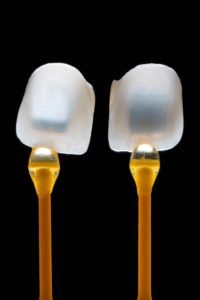
composite dental reconstructions
In short, dental esthetics plays a fundamental role in our oral health. The treatments available to repair a damaged tooth are varied and range from dental veneers to reconstructions with inlays or post and crown. These solutions not only improve the esthetic appearance, but also restore the functionality of the affected teeth. In addition, it is possible to restore a smile after dental trauma thanks to dental advances and modern dental reconstruction techniques. However, it is important to remember that each case is unique and should be evaluated by a professional in a dental clinic. The key is to find the right treatment for each particular situation. As dentistry advances, it is interesting to reflect on what the next advances in dental reconstruction will be and how techniques will continue to evolve to improve our oral health.
6. What are the steps to perform a dental reconstruction?
To fully understand the steps involved in molar reconstruction, it is important to consider the progressive nature of caries. Initially, dental caries affects only the outermost layer of the tooth, known as enamel. If left untreated, however, the infection gradually advances deeper into the tooth structure. When decay reaches this stage, a procedure called endodontic treatment becomes necessary to restore the tooth.
During an endodontic treatment, the infected pulp tissue is carefully removed from the root canals of the tooth. This process involves meticulous cleaning and disinfection of the carcasses to ensure the elimination of any bacteria or residues. Once the canals are thoroughly cleaned, they are filled with a biocompatible material to provide stability and prevent reinfection.
However, molar reconstruction does not end with the completion of endodontic treatment. After removal of the infected pulp, the tooth may require additional steps to restore its function and esthetics. This commonly involves the placement of a filling material, such as composite or porcelain, to fill the cavity caused by caries. The filling material is carefully shaped and polished to match the natural contours of the tooth.
It should be mentioned that the occlusal adjustment process may also be necessary to ensure proper alignment and contact between the reconstructed tooth and the antagonist teeth. This technique consists of selectively modifying the occlusal surfaces of the tooth to achieve an optimal bite and eliminate possible interferences.
In summary, molar reconstruction involves several essential steps. It begins with the diagnosis and treatment of dental caries, followed by removal of the infected pulp and subsequent root canal filling. Additional procedures, such as cavity filling and occlusal adjustment, can also be performed to restore the functionality and esthetics of the tooth. By following these meticulous steps, dental professionals can successfully reconstruct and restore a molar, allowing patients to regain their oral health and confidence.
7. When do we perform dental reconstructions?
Dental reconstruction is a highly effective treatment used in a variety of circumstances to restore both esthetics and functionality of teeth. This method is especially recommended in cases such as the presence of large cavities, dental wear caused by bruxism and fractures resulting from dental trauma.
In the presence of large caries, the dental reconstruction procedureinvolves the removal of the affected area and the subsequent application of composite resin. This composite material not only provides durability and strength but also ensures the preservation of the patient’s dental esthetics.
Tooth wear caused by bruxism can lead to tooth fracture, which can significantly affect both the appearance and function of the affected tooth. In such cases, dental reconstruction is an ideal solution to restore the damaged tooth, thus improving chewing and overall oral health.
In addition, dental reconstruction is a viable option to address fractures, fissures and cracksin teeth. By using a composite resin known as a composite, these problems can be effectively addressed by bonding the material to the tooth structure. In addition, this technique can be used to improve the shape and color of anterior teeth in a conservative and efficient manner, thus improving overall dental esthetics.
In summary, dental reconstruction is a versatile treatment that can be used in a variety of scenarios, including the presence of large cavities, tooth wear due to bruxism and fractures caused by dental trauma. By utilizing techniques such as composite resin application, this method successfully restores both the appearance and functionality of teeth and ultimately improves oral health and patient satisfaction.
8. What types of reconstructions are there?
There are four types of dental reconstructions: composite fillings, inlays, crowns and veneers.
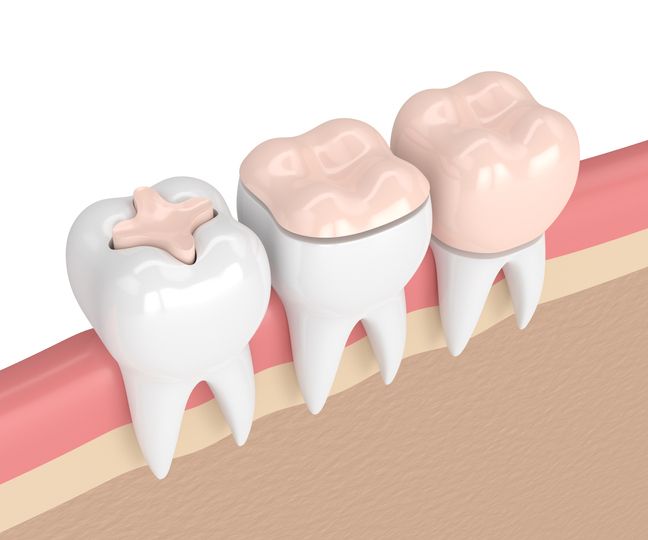
With a filling, we fill the cavities of a tooth or a molar after removing the decay. Inlays, on the other hand, are used especially for the reconstruction of molars that have lost a large part of their structure, but retain their anatomical shape. We can differentiate between onlays, inlays and overlays. These pieces are embedded and cemented in the affected molars. Dental veneers, made of composite and porcelain, are a treatment option when a tooth is partially fractured. Finally, reconstruction with a fiberglass pin and a dental crown may sometimes be necessary. For example, after an endodontic treatment, when the tooth is very low.
If you have any questions or would like to make an appointment for us to evaluate your case, you can contact us at 93 272 48 30 (Barcelona) / 971 315 374 (Ibiza) or leave us your details in the form on our website.
At IMOI Barcelona and IMOI Ibiza, we follow editorial principles that guarantee the authenticity of all the information we disseminate. If you are interested in learning more about how we ensure that our content is always up-to-date and accurately supported, we invite you to review our editorial commitment.
This article has been supervised by Dr. Ferran Novell Costa and Dra. Erjona Demiraj, specialists in Dental Health and Dental Aesthetics treatments. Responsible for the treatments provided at IMOI Barcelona and IMOI Ibiza and for the supervision and/or updating of the contents of this blog entry. The recommendations described are not generic and do not replace the diagnosis and evaluation of a professional in a dental office. If you want us to clarify any aspect or you want a personalized diagnosis and advice we recommend you to come to our dental clinics.
Reproduction in whole or in part in any medium without written permission is prohibited.


