

Created 10/29/2015
Updated 15/12/2019
For many children, the pacifier is a very important object that provides comfort and well-being. However, there is a limit to its use and at a certain age it must disappear from your life. But really what are pacifiers for children used for? Is there any benefit to using an infant pacifier?
What are pacifiers for children?
Pacifiers are “pacifier” devices used to meet the baby’s needs that have been used for decades. Today’s baby pacifiers come in different shapes and sizes. Most countries legislate that infant pacifiers are made of non-toxic materials.
What are the benefits of using pacifiers for babies?
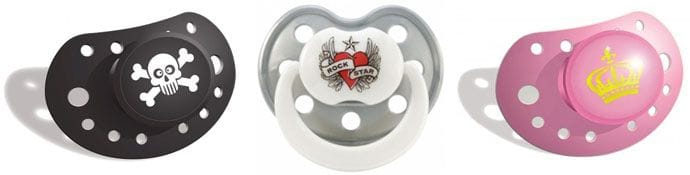
- Pacifiers can meet your baby’s needs during non-nutritive sucking. Sucking is a normal infant reflex. All babies have a need to suck, but the amount of sucking varies from baby to baby. For many babies the urge to suck seems to be more than what is needed for nutrition. Many babies want to suck when they are tired, bored or in need of comfort. If your baby wants to suck beyond what feeding, nursing or bottle-feeding offers, a pacifier can satisfy that need.
- Pacifiers can help your baby sleep. The pleasurable stimulation of sucking on a pacifier, fingers, hand or breast helps babies cope better with the many distractions of a big, confusing world.
- Pacifiers may reduce the risk of Sudden Infant Death Syndrome (SIDS) . There are a number of studies that have identified a substantially lower incidence of SIDS in infants who use pacifiers compared to those who do not. Just as the cause of SIDS is not clearly understood, the positive effects provided by the use of pacifiers remains unclear, but it is believed that it may be due to the fact that with this object breathing becomes calmer and more regular, and also to the fact that when sucking, the tongue remains in the front part of the mouth, thus leaving the airway free.
Problems associated with pacifier use.
The reason is that, if its continued use is prolonged beyond the age of 3.5 years, it can end up being negative for the child due to the following main reasons:
- With the pacifier in the mouth, the muscles of the mouth are less trained, which increases drooling and may also cause difficulty in eating and delay speech development.
- It can affect your teeth. Sometimes, having a pacifier in the mouth for a prolonged and continuous period of time is harmful to the baby teeth and, in the long run, even to the permanent teeth.
- The child may hurt himself/herself. When he starts running and jumping, the risk of falling forward increases. If this happens while the pacifier is in his mouth, he may injure his lips, nose, gums or front teeth.
- It may slow down their emotional and social development. If whenever he feels sad or bored he resorts to the pacifier, the child does not learn other ways, such as entertaining himself with toys, AND it prevents him from relating well with other children his age. The use of pacifiers (or thumb sucking) beyond the age of 5 can affect the shape of your child’s mouth or teeth, causing teeth to protrude or become dislodged. Pacifiers that are frequently dipped in sweet substances such as sugar, juices can lead to increased tooth decay.
- Pacifiers increase the risk of ear infections. Pacifier use appears to be a risk factor in the development of middle ear infection (otitis media). Authors speculate that continuous sucking on a pacifier may alter the pressure inside the middle ear chamber where ear infections can form. (However, this study does not suggest pacifier use is the only factor involved when it comes to ear infections). It was also identified in this study that prolonged or more frequent use of pacifiers was related to a higher incidence of middle ear infections than restricted use. The results suggest that between the ages of 6 and 10 months, restricting pacifier use to bedtime would reduce the risk of middle ear infections.
As you can see everything is beneficial having a control
For any questions do not hesitate to use the chat on the page, our dentists will help you.
At IMOI Barcelona and IMOI Ibiza, we follow editorial principles that guarantee the authenticity of all the information we disseminate. If you are interested in learning more about how we ensure that our content is always up-to-date and accurately supported, we invite you to review our editorial commitment.
This article has been supervised by Dr. Ferran Novell Costa and Dra. Erjona Demiraj, specialists in Dental Health and Dental Aesthetics treatments. Responsible for the treatments provided at IMOI Barcelona and IMOI Ibiza and for the supervision and/or updating of the contents of this blog entry. (7/11/2023). The recommendations described are not generic and do not replace the diagnosis and evaluation of a professional in a dental office. If you want us to clarify any aspect or you want a personalized diagnosis and advice we recommend you to come to our dental clinics.
Reproduction in whole or in part in any medium without written permission is prohibited.


